
Throughout the workday, electrical professionals perform a wide range of tasks that place constant demands on their hands. While jobsite safety conversations often focus on electrical hazards, everyday hand injuries remain a significant concern. Abrasions, cuts and repetitive material handling tasks can all impact worker safety, comfort, and efficiency. Reliable hand protection isn’t only about meeting safety requirements, but also about helping workers stay productive and efficient throughout the entire day.
The Reality of Hand Hazards on the Electrical Jobsite
From pulling wire and handling conduit, to working with strut, cable trays, fasteners, and electrical boxes, electricians perform countless tasks that place constant demands on their hands. Frequent contact with rougher materials creates friction and abrasion that can quickly wear down gloves. As gloves begin to break down, workers may experience reduced grip, exposed wear points, and less protection from rough materials. This can increase the likelihood of cuts, scrapes, blisters, and other hand injuries that impact comfort and productivity. While these injuries may seem minor, they can create distractions and slow down work throughout the day, making durable hand protection essential on the jobsite.
Why Hand Protection Matters Beyond Compliance
Hand protection is a crucial part of helping ensure compliance with personal protective equipment (PPE) requirements. However, compliance should be viewed as the starting point rather than the end goal. Gloves should be comfortable, durable, and designed to encourage consistent wear throughout the workday. When workers trust the PPE they’re wearing, they are more likely to keep it on while performing daily tasks.
Effective hand protection can help reduce distractions caused by discomfort or poor fit, allowing crews to remain focused on the task at hand. At the same time, durability should not come at the expense of dexterity. Electrical work often requires handling small components, connectors, wire nuts, and other materials that demand precision. Gloves need to provide users with long-lasting wear while maintaining grip, comfort, and control. The most effective hand protection solutions help workers complete tasks efficiently without constantly replacing worn out PPE or sacrificing control and comfort.
Milwaukee Tool Wear Defense ™ Gloves: Designed to Last
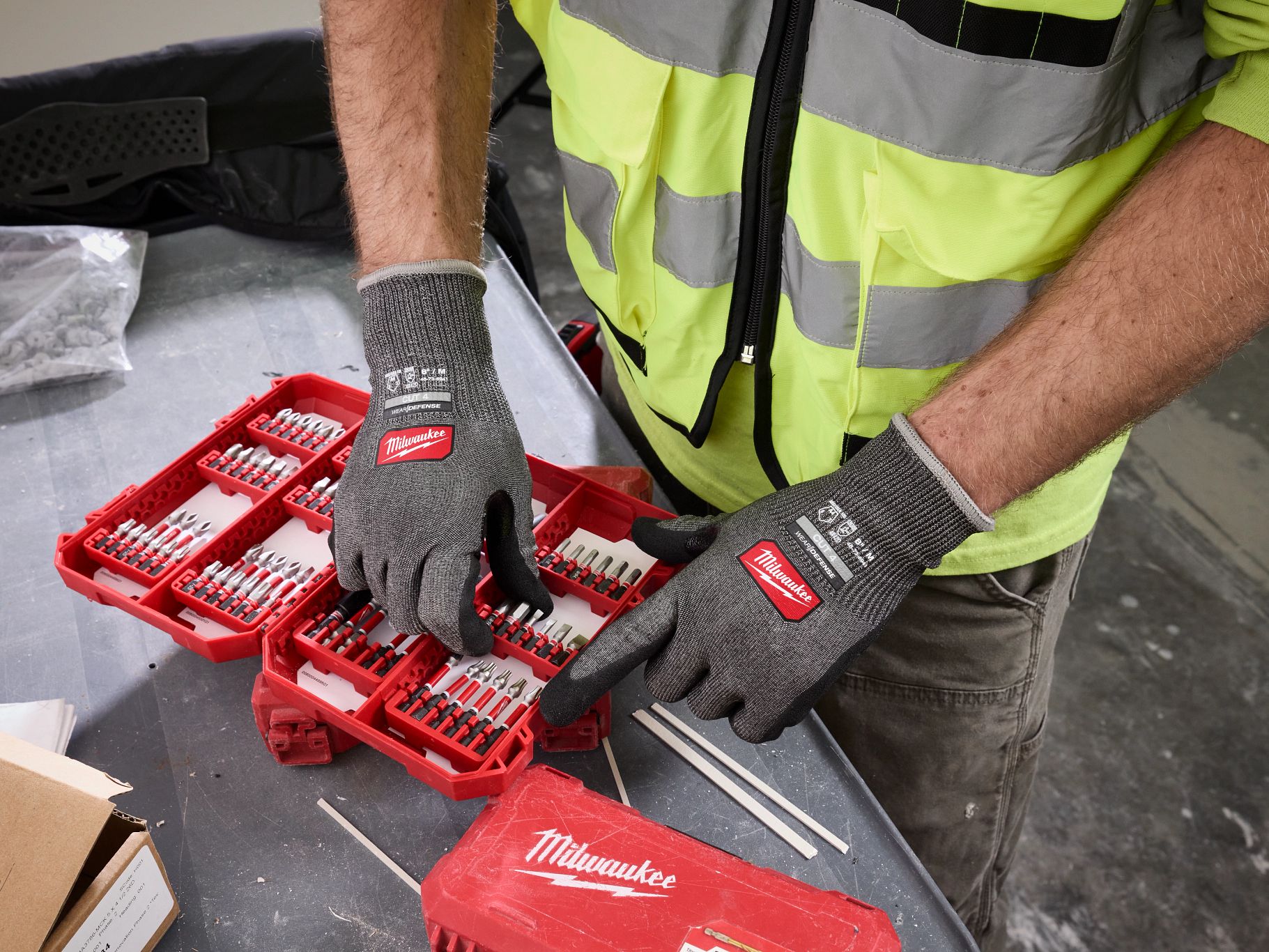
Keeping the end user at the forefront of innovation, Milwaukee Tool developed High-Dexterity Nitrile gloves with WEAR-DEFENSE™ Protection to help professionals maintain hand protection without sacrificing the dexterity needed for precision work. Available in cut levels 1 and 3-6, the gloves combine a lightweight knit construction with a durable nitrile coating engineered to withstand demanding, high-wear applications. Designed with enhanced wear resistance in high-abrasion areas where gloves typically experience the most stress, these gloves help extend service life during repetitive tasks. The gloves high-dexterity design allows electricians to maintain grip and control when handling small components including connectors, and fasteners, while the breathable fit promotes comfort throughout long workdays. By balancing durability, dexterity, and protection, the WEAR-DEFENSE™ lineup is designed to support a wide range of electrical applications.
Supporting Safer, More Productive Jobsites
Reliable hand protection is more than checking a compliance box. Durable, comfortable gloves can help workers stay protected, maintain productivity, and stay focused throughout the workday. Safety leaders and contractors play an important role in selecting PPE that workers will consistently wear and trust on the jobsite. By combining wear resistance, dexterity, and protection, Milwaukee Tool’s WEAR-DEFENSE™ Gloves are engineered to meet the demands of the electrical trades and help professionals work with confidence from the start of the day to the last task on the jobsite.