

By Paula Bahler, IEC Chesapeake
At SPARK in 2025, I offered some tips on how chapters and contractors work together to build the workforce of tomorrow — and offer these same tips here for Insights readers. I have a passion for the skilled trades and apprenticeship and believe I am at my best helping young people find a skilled trades career. I’ve been involved with workforce development since 2014 and at IEC Chesapeake (IECC) for three years. We offer varied opportunities for training:
- Four-year electrical
- Two-year telecommunications / low voltage
- School to Apprentice — high school seniors who start first year of their electrical apprenticeship while still in high school
- Pre-Apprenticeship — second semester high school senior preparatory course for adult apprenticeship after graduation
- E-Apprentice — available for four-year electrical related instruction; an alternative to the in-person classes for those unable to attend traditional apprenticeship
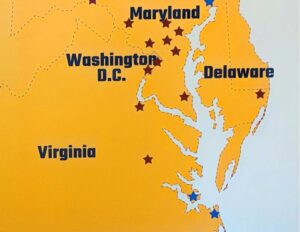
IEC Chesapeake has a sizeable footprint with 16 locations in Maryland, Washington D.C., and Virginia. My territory is Maryland. Maryland is not a big state but it is one with a highly concentrated population. There are 255 high schools in Maryland, along with 13 workforce development boards and numerous non-profit organizations. Two of us cover Maryland and we’re set up like a sales team — one outside and one inside member.
Like many other chapters, we have found young people leaving high school or still in high school as a strong target audience. We work hard to get in front of these potential apprentices and count upon our contractor members to support this effort.
What Else We’ve Learned
It can be difficult to effectively reach all of those young people in that target market. Everyone wants us to come to their career fairs, speak on panels, talk to students, and tour our facility. But it is not possible to be everywhere, so we’ve learned to be efficient. One way we do that is to build a bigger team by using school counselors and career coaches as a first level of screening to be sure we participate in the right activities. Another way is to involve contractor members and apprentices in our outreach.
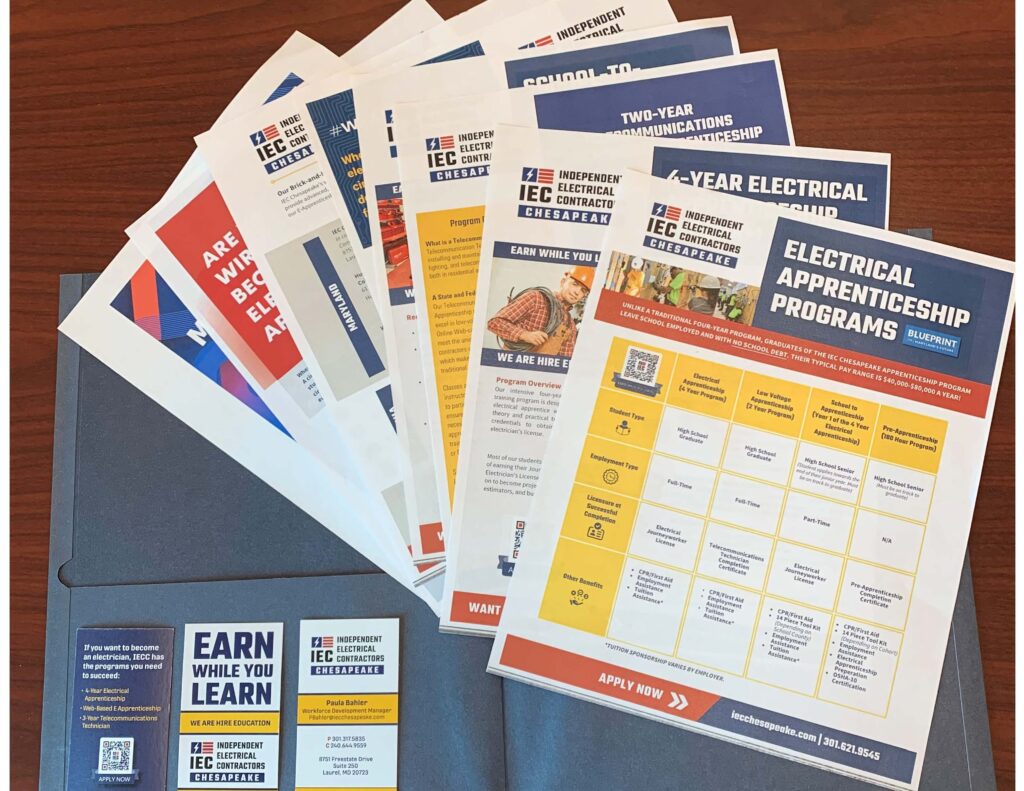
We help our counselor teams help us by creating a counselor packet. This is a term familiar and relatable to school personnel and workforce development partners who may be counseling clients outside of the schools. Counselor packets, distributed by email, include the following fact sheets:
- Pathways graphic
- Four-year electrical apprenticeship to journeyman
- Two-year telecon tech / low voltage apprenticeship
- School to apprentice
- Pre-Apprentice
- Are You Wired
- Class locations
- Merit shop strong
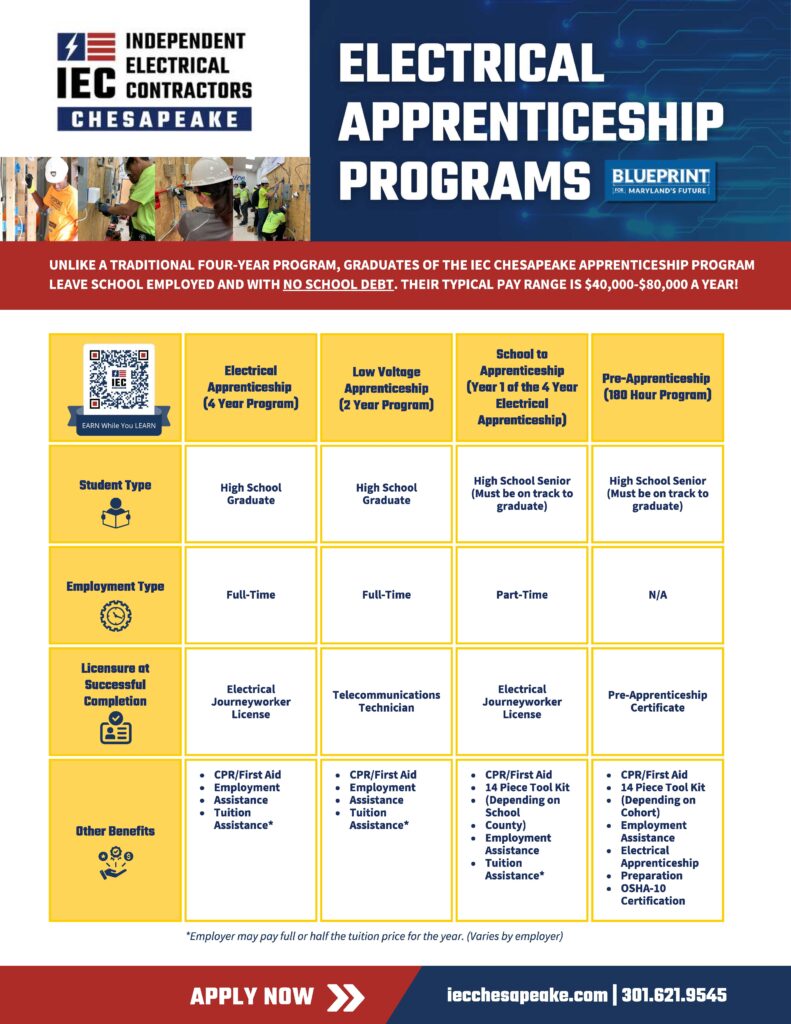
The pathways graphic is the most important and most popular item as it outlines the four programs IECC offers with pathways to careers on one sheet, providing a snapshot of:
- School level required to apply
- Type of employment (full time, part time, no work component)
- Pathway outcome
- Certifications
- Benefits
This single sheet is branded with the “Blueprint for Maryland’s Future” logo, an initiative for high schools to send 45% of their students to a career or apprenticeship by 2030. It’s a big deal in Maryland so adding this branding is recognizable to school partners.
The next four sheets in the counselor packet are for each of our programs — four-year electrical apprenticeship to journeyman; two-year telecon tech / low voltage apprenticeship; school to apprentice; pre-apprentice. These sheets dive in a bit deeper on program details and include information on how to take the next step.
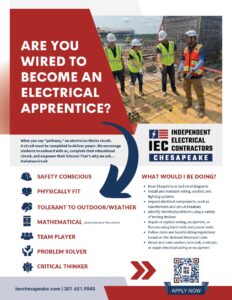
“Are you Wired to Become an Electrical Apprentice?” also is a very important fact sheet. Counselors often ask us what kind of students we are looking for. This sheet provides some direction to the counselor and the candidate. We also are hoping to differentiate electrician from electrical engineer; the photo of a construction site helps illustrate this. Boldly including the words mathematical, problem solver, and critical thinker allows us to highlight the strong level of candidate we are looking for.
“Merit Shop Strong” introduces the concept of merit shops and softly suggests differences from union shops.
Finally, our locations sheet allows counselors to see where IEC Chesapeake training is offered so they can further advise their students.
Career Fairs
When we do participate in job fairs, we rely heavily on counselors to advise us. We look for regional events where multiple schools are at one location and other proven events, curated events, and large industry events promoting construction and the trades overall. While there, we do everything possible to spend time with the right people and set up our booth accordingly.
We have a large popup banner with a headline that can be read from across the room — Become an Electrician. On the table, we always have our ‘short list’ of what to expect as an electrical apprentice and hit those highlights that define the strength of our programs:
- NO experience needed
- NO student debt
- Earn journeyworker license
- Earn college credit
- Paid apprenticeship
- Attend class twice a week — one in person and one virtual
- Work full time
Our “Are You Wired?” sheet is prominently displayed as are boots, a tool kit, and a hard hat. When we are approached by candidates interested in cyber security, electrical engineering, or those indifferent or ready to sign up for anything, it is an easy illustration of an electrician. I usually say, “Electricians wear a hard hat, boots, and a tool belt, working outside on a construction site. Is that what you would like to do?” It’s an easy screening tool.
Those who are interested may scan our table top QR code. This is our method of collecting and distributing information. This QR code takes them to a google doc with a short questionnaire that can be filled out quickly. It asks for name and email and answers to a few questions. For example, the graduation year is a very telling question. If they have graduated, it tells us which email template to send them. High school sophomores or juniors are potential school to apprentice candidates.
What you do not see at our booths are giveaways. Instead, we invite visitors to participate in hands on activities or games so they can ‘feel’ what it is like to be an electrician and better understand if it might be a possible career for them.
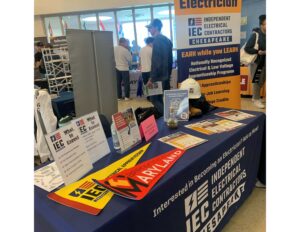
We have the sheets from the counselor packet laminated and displayed. We do not hand out this packet but rather email packets to those who have requested it. We have all seen those at career fairs carrying arms full of paper they have picked up and business cards stuffed in their pockets which end up like breadcrumbs on the floor. How many of these busy counselors are going back to their office to sift through and file the papers away so they can find them again? By emailing everything later, we have saved a tree and created an opportunity to touch them again. Our packet is now searchable in their email or they can print it out as needed.
Other Recruitment Efforts
These, too, focus on building and reenforcing our relationships, as well as chapter branding with school counselors and recruiters.
- We visit school counselor trainings both in person and virtually. They are always looking for speakers at training meetings / professional development days.
- We offer space at the IECC training facility so counselors can do professional development. In exchange for the space, we offer a tour of the site and a presentation on electrical apprenticeship.
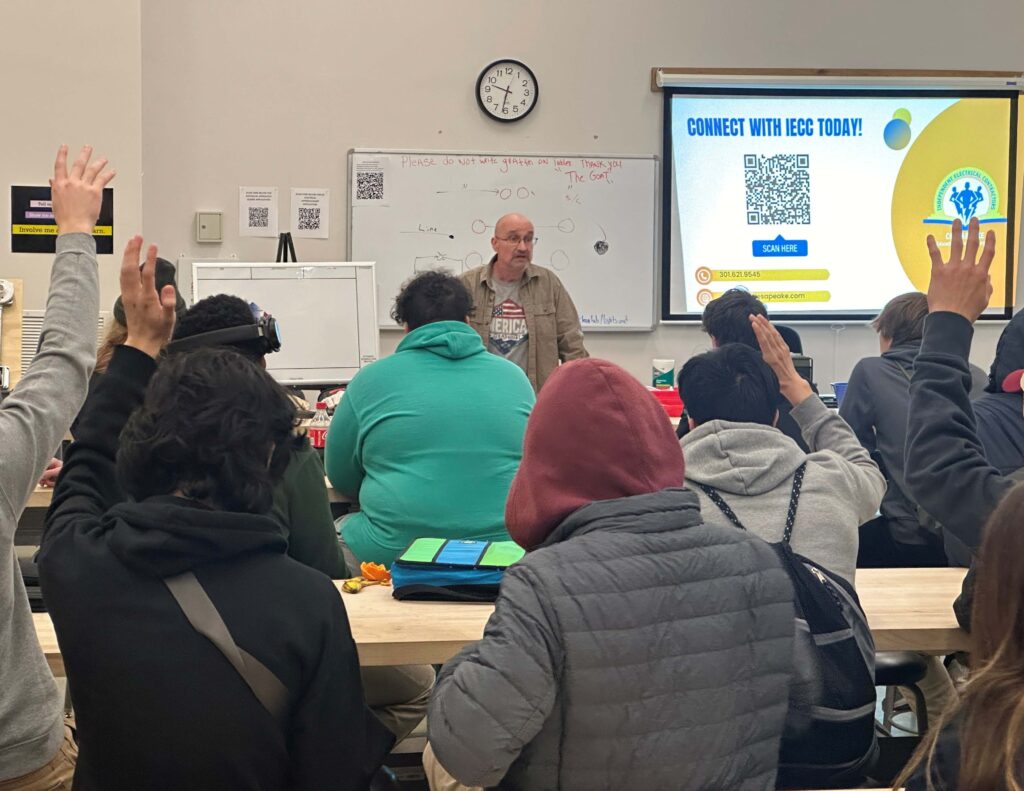
- We have developed relationships with career and technical education (CTE) electrical instructors to visit their classrooms and invite them to IECC. They are often looking for a next step for their students. We can answer questions about skills, donate materials, and supply contractors for their mock interview days. We know contractors are busy but have found most usually are available for an hour to talk to students in their community CTE school. They often enjoy it. I attend to answer questions and provide moral support.
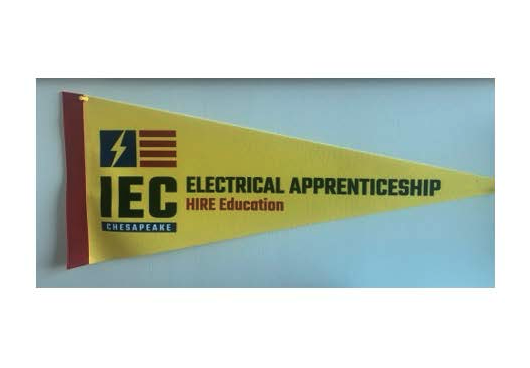
- Targeted branding — using the easy Canva tools provided by IEC National, we have created items with the Chesapeake logo, like a lightbulb, pennants, and banners.
- Recruiting videos include one for adult apprentices, one for youth apprentices, and one for potential employers. We include a QR code to those videos wherever we can. These are six-minute videos that we can use when doing live or virtual presentations to groups, or provide to others to use on their own. It allows us to be everywhere.
- IECC hosts opens houses for adults and youth, both on location and virtually. The youth open house includes parents / guardians and school counselors. We also host open houses specifically for counselors.
- We offer a CTE Career Day, which includes breakout rooms of professionals working on hands-on activities with potential apprentices. Participants are truly engaged so teachers look forward to this annual event.
Involve Apprentices
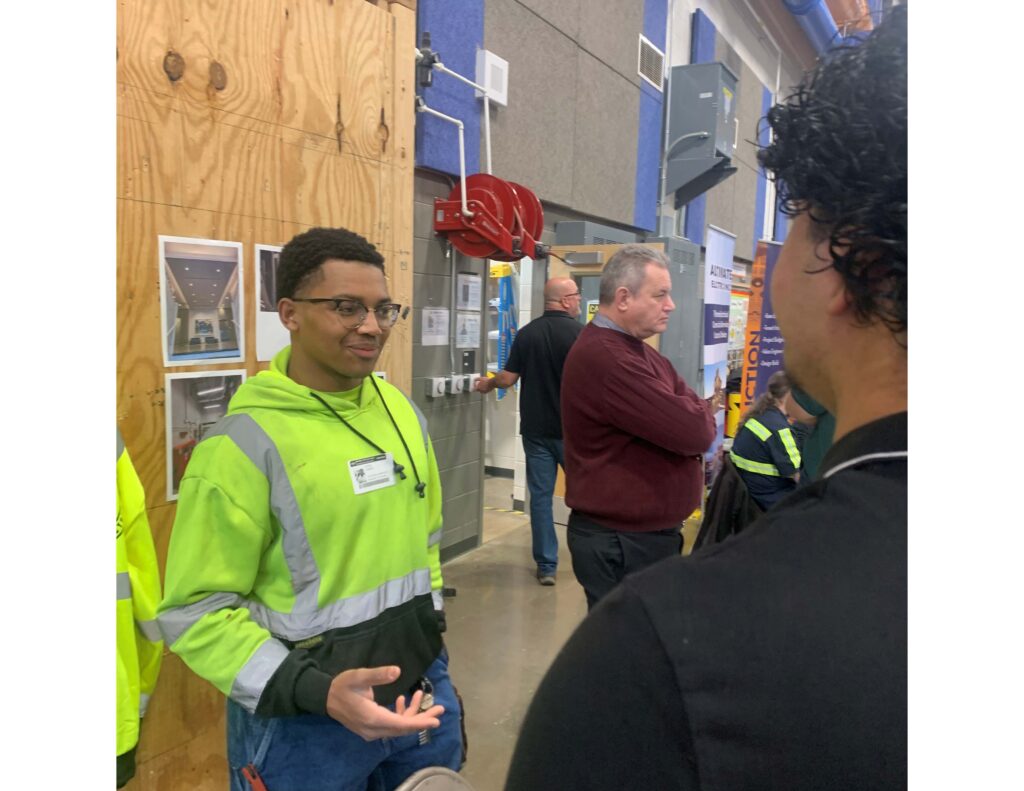
It is important to state the obvious — apprentices are your best recruiters. Involve them as much as possible to talk about their experiences so they can invite the next potential career electrician to IEC training. Peer-to-peer conversation works!