
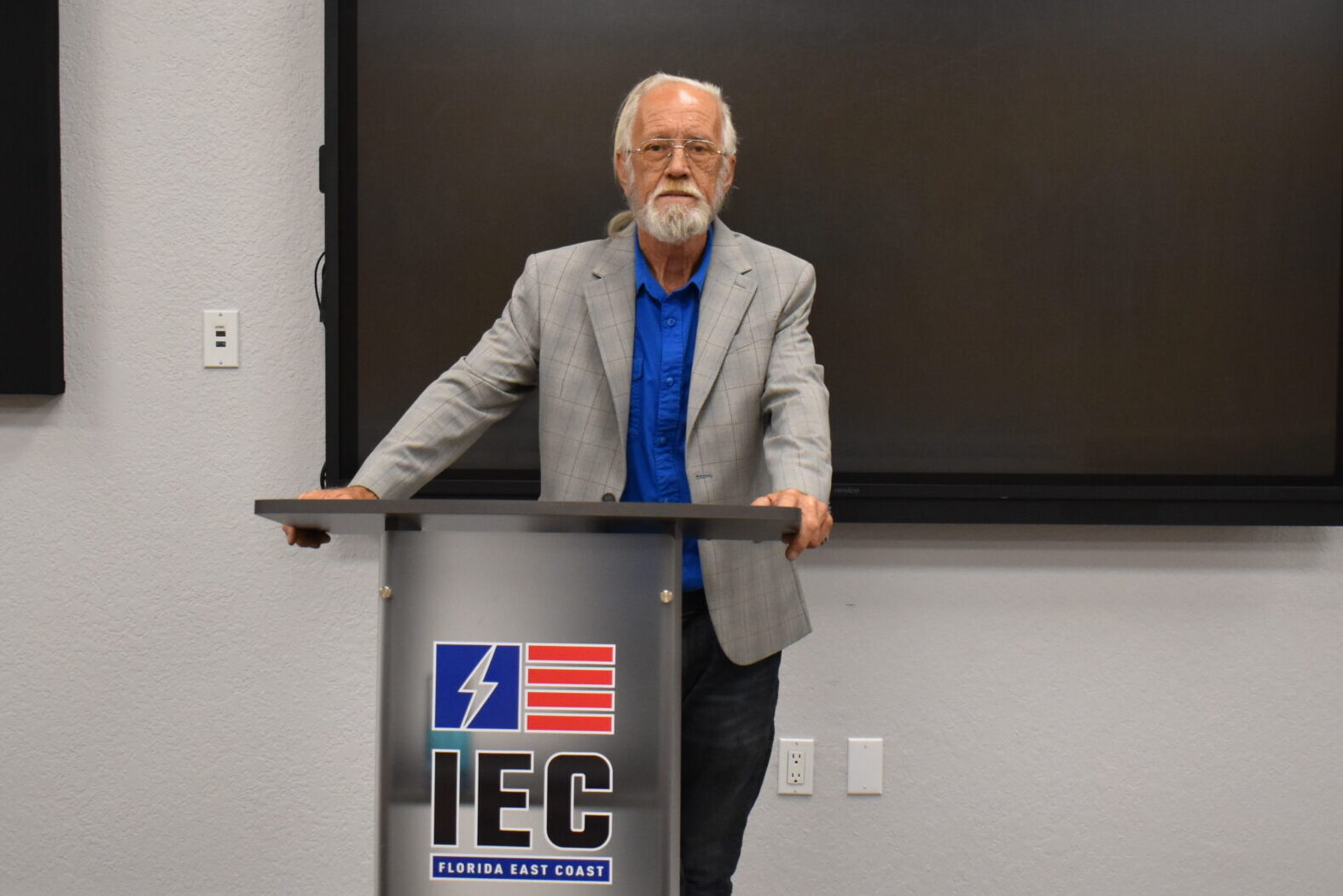
David J. Nutter, ESC-D, believes there is a huge need for qualified limited energy professionals in today’s marketplace. And he is passionate about ensuring that those taking this career path are trained properly for a satisfying career. He also believes you never stop learning and preparing yourself. In fact, he recently became a certified electronics systems designer, ESC-D.
David is president and owner of Electro Arts Enterprises, Inc. (EAE), a leading audiovisual contractor in the West Palm Beach, FL, area since 1985 and an instructor in the first of its kind Limited Energy Apprenticeship Program at IEC Florida East Coast.
He has built his career, company, and reputation focused on professionalism and getting each and every job done correctly for customers, including a large volume of limited energy projects.
David is committed to encouraging his fellow electrical contractors to seek and prepare for the opportunities of this growing field.
Tinkering His Way to the Top
David came into the field after a childhood filled with mechanical adventures with his father and brothers and a love for music and stereo systems. He credits his father as the source of a lot of his drive, saying that when he was young, they never threw anything away; they fixed it. His mother would get upset because he, his dad, and brothers would take stuff to the dump and they’d come home with more than they took.
“For me and my brothers, it was a blast,” David recalls. “We had a huge basement and we could just tinker and make things. It was great and it gave me all kinds of mechanical skills that many younger people don’t get this way anymore. We’ve become a throwaway society, and it’s kind of sad. I always wanted to invent something and came up with some pretty cool things early on. I just never took the time to patent them. I’ve still got a couple of ideas coming though!”
After high school, he headed to college to pursue a career as an electronics engineer. The hard-working young man put himself through school working as an electrician and completed the program.
“I went to interview with quite a few larger electronics firms and found that the majority of them wanted you to sign a document that said they pretty much owned your mind,” he says. “That’s when I decided to obtain my master’s license and open my electrical contracting business instead. The company name, Electro Arts, shows that I never had the intention of being the typical electrician.”
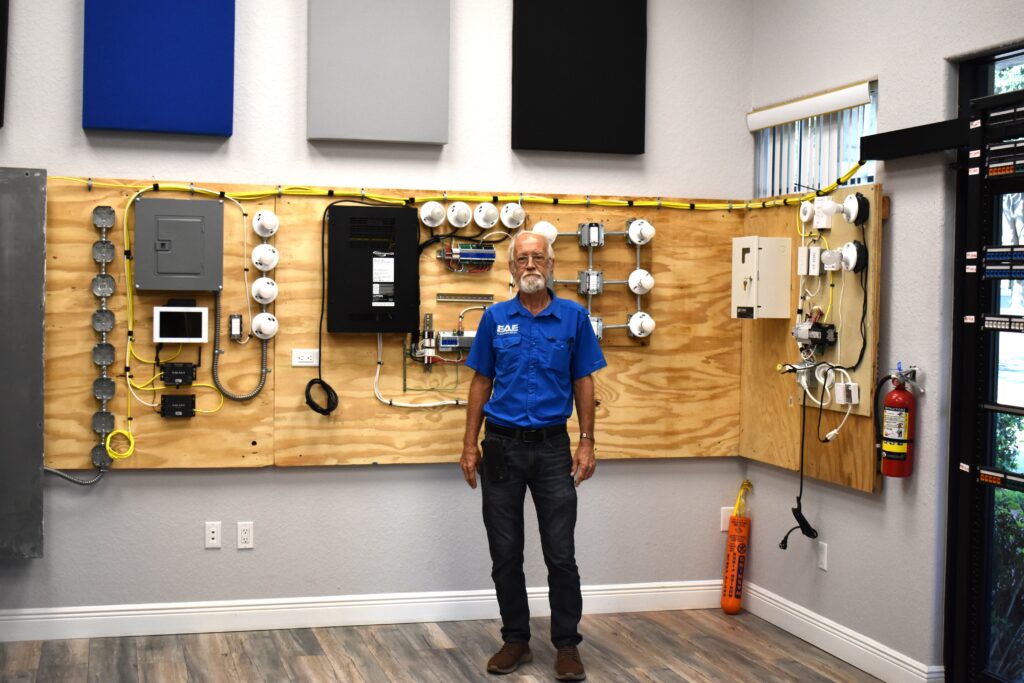
With his electronics interests and his location in the wealthy West Palm Beach area, David could put his skills — and his passions — into action.
“Back in the mid-1980s, of course, the technology was not what we have now,” David notes. “But the designers in the area wanted to incorporate music into these large, very expensive homes. With my electronics background, I was able to figure out ways, for example, to take old-style box speakers and actually fit them into walls using materials from good old Radio Shack. A homeowner could turn the system on and control the volume simply by walking into the room.”
David explains a process he created where he put in a regular rheostat in the wall, added some buttons, and built a control box to do all the switching. That way depending upon which room was turned on, it automatically would create the correct ohmage for each area.
“I should have submitted that invention; I would have been a millionaire now,” he jokes. “But I didn’t because I had a business to run.”
He continued to find innovative solutions for his customers and, today, Electro Arts Enterprises, Inc. is an audiovisual contractor specializing in home theater design and installation, audio / video integration, computer networks, and more with a full-service electrical contracting division as well.
His Quest to Establish Professional Training
With the limited energy division of Electro Arts experiencing explosive growth, David sought training for his employees. Locally, that training just didn’t exist. He found CEDIA, the Custom Electronics Design and Installation Association, and now known as the Association for Smart Home Professionals™, and began to work with them. However, he found himself having to send his employees all over the country at great expense to get the proper instruction and certifications.
“As one of the founding Board members of IEC Florida East Coast, I felt this was where limited energy training should occur,” David says.
While the Board also saw the need, there were a number of other priorities that the chapter had to initiate first. Also, early on, electricians didn’t necessarily see the importance of specialized training for the limited energy field outside of the regular IEC Apprenticeship Program. David kept the idea afloat over the years whether serving on the Board, on the local and National A&T committees, or as an instructor.
His patience and determination paid off. IEC Florida East Coast established the two-year Limited Energy Apprenticeship Program for the 2023-2024 school year with 15 students enrolled. David prepared the curriculum and taught the first class of apprentices. For the 2024-2025 school year, David continued to teach the now second years and began a new first year class of 19 students. For the new school year beginning fall 2026, 12-15 students are expected.
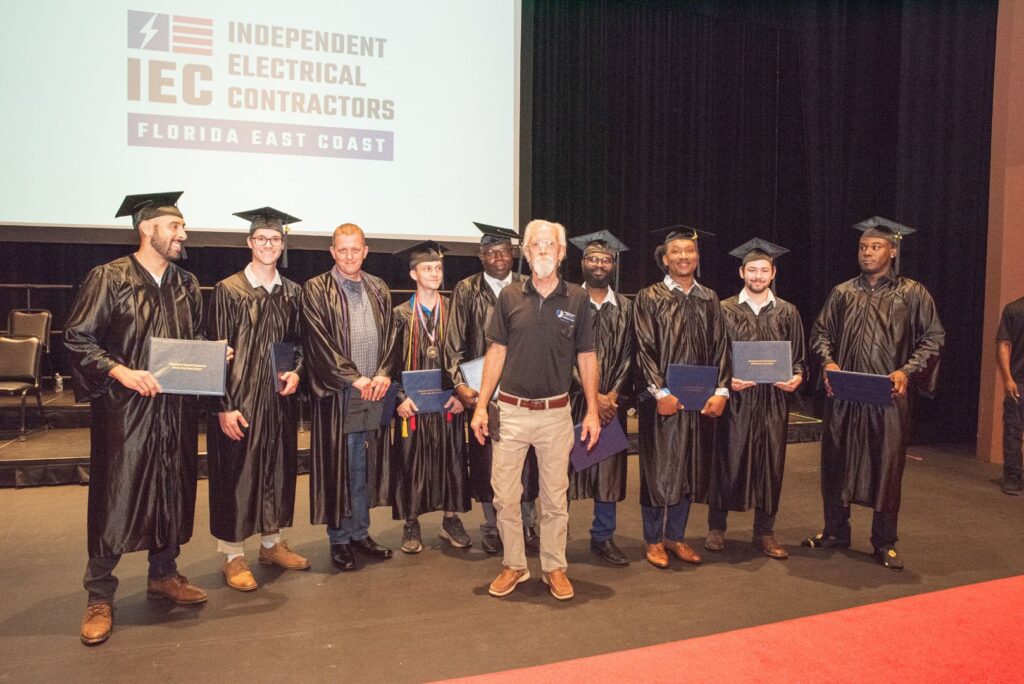
Of those 15 initial students, 11 graduated in May 2025, and David couldn’t have been prouder. In that next class, 6 students completed their studies and graduated in May of 2026. David is working with IEC Florida East Coast to get more instructors trained for the coming years.
“The limited energy apprenticeship functions exactly like the regular four-year apprenticeship program,” David explains. “The contractor sponsors the employee to pay for their education. Students come to class two nights each week for three hours. The curriculum is a modular-based program.
“However, there is a huge difference between somebody that works in the limited energy field and somebody that’s an electrician,” David continues. “There have been some hurdles getting electricians to understand why it’s important for them to get involved in limited energy. That understanding is coming, but it’s been a bit bigger task than I thought it would be. On the other side, trying to get limited energy contractors to understand an apprenticeship was another hurdle because they’ve never seen it before so they don’t understand it.”
One key difference in the two types of electrical work are the additional steps in limited energy. Once installations are complete, there is programming, testing, and documentation. David says documentation is more extensive throughout the job as well and one reason is for proper servicing down the road.
“Servicing some of these systems can be an absolute nightmare, because there are so many wires and connections involved,” David says. “If you don’t have a good starting point, it can take forever to try to trace things out. When troubleshooting, you have to be able to understand what can be happening in the background to come up with a solution.”
When designing apprentice curriculum, David paid special attention to explaining the ‘why’ behind the actions being taught. This is the reason he has been advocating for a limited energy apprenticeship program all along.
Setting the curriculum up as modules was intentional. The IEC National A&T Committee believes offering modules is a great way to help introduce new programs as chapters can tailor programs to best suit the needs of their networks.
Amplifying the Message
In April 2026, David continued his quest of encouraging professional training in limited energy. He developed and presented a webinar to the IEC community, “How Limited Energy Can Benefit Your Business,” to share what he’s learned over the years. He outlined for attendees what the field is about, its opportunities and risks, its special systems, and its earning potential for electrical contractors offering these services. He geared his comments to both electrical contractors to encourage developing limited energy divisions and IEC chapters to create limited energy apprenticeship programs. His goal was to provide the information and tools needed to capitalize on this burgeoning need for limited energy professionals.
“The limited energy world is continually expanding,” he says in the webinar. “There are lots of opportunities, lots of different things you can do with it. Limited energy special systems and fields include structured wiring systems, surveillance systems, fire alarm, PoE lighting, audio and sound systems, BMS and control systems, lighting control systems, and automation systems.”
David dangled the carrot of higher earnings potential for electrical contractors expanding into limited energy projects.
“Depending on your area, you might find that you have some fairly aggressive labor rates for limited energy work,” he says. “You might find that you have some aggressive markup on a product. You might find that for specialty services, you can charge different labor rates than what you’re charging as an electrical contractor. You are going to want to do some research in the area and market you are in. Do your due diligence.”
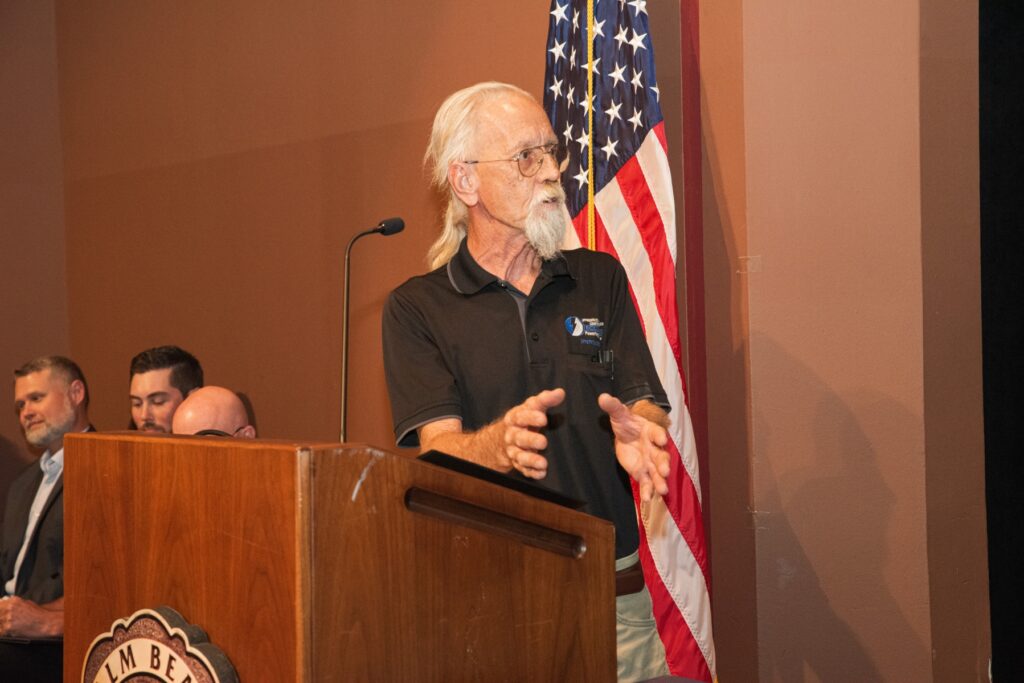
David says professional limited energy professionals have a number of career paths to follow including assistant and lead limited energy technician, systems programmer, project supervisor, project manager, purchasing and material management, systems design, information technology professional, network professional, estimating and sales, and owner / contractor.
“It’s kind of like doctors,” he says. “You have a general practitioner that does a little bit of everything but then there are all the specialties doctors can get into like cardiology. It’s the same with limited energy — there are lots of different facets like fire alarm or security, or networking. It’s a wide-open field.”
Additional IEC Training
IEC developed a number of professional limited energy courses which are available online now for chapters to investigate, including:
- Introduction to Limited Energy
- Structured Cabling
- Fire Alarm
- PoE Lighting
- Surveillance Systems
Courses on audio and sound systems as well as commercial control systems are coming soon through the IEC CMS.
David is adamant about proper training as the field has often been tainted by those who are not really equipped to do the necessary work. He says in the limited energy world, there were a lot of guys who go out and think they can do it, but they don’t have the training they need. They fail, they leave the contractor hanging, and that hurts the whole industry.
“I’ve always strived for professionalism,” David stresses. “This field is a blast. It’s an excellent opportunity for younger people to get into a profession they can love.”