

IEC introduced its updated Safety Manual to all IEC members in May. It is a resource designed to help members maintain safer, more efficient job sites and strengthen their overall safety culture. Member companies should access the document to review, evaluate each section for their specific company needs, and revise accordingly.
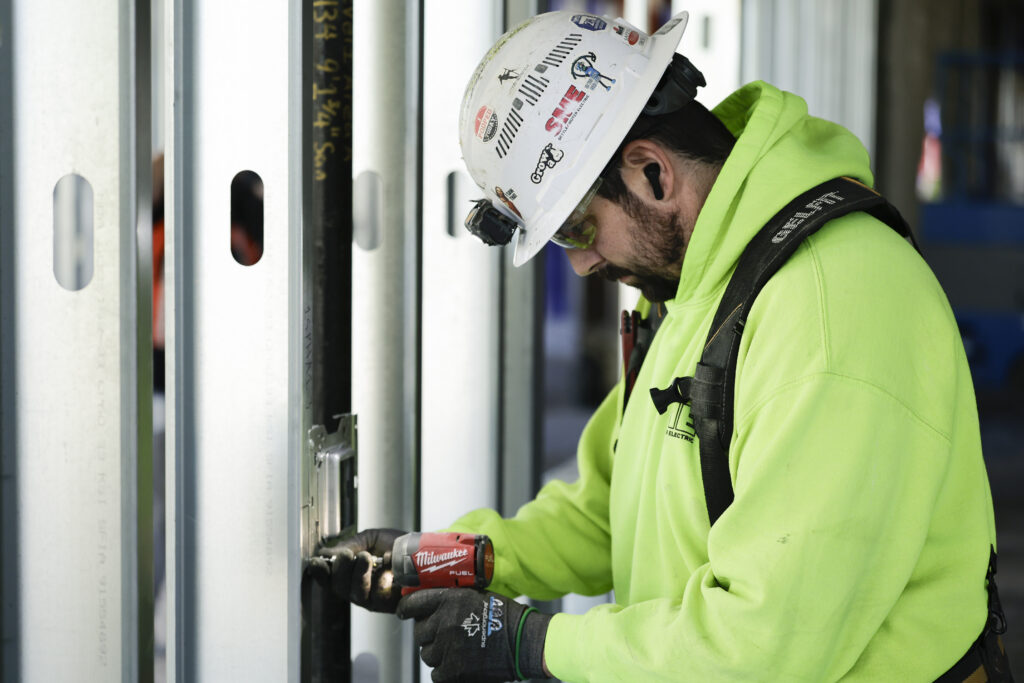
“This tool gives your team baseline safety guidance, best practices, and resources designed to support a strong safety culture and help protect your workforce every day,” says Jeff Wolfla, IEC Safety Committee member and lead on the manual updates. “It is a formal document that outlines a company’s health, safety, and environmental approach — helping protect employees, reduce job site hazards, and support compliance with Occupational Safety and Health Administration (OSHA) and other applicable codes and standards. It is not a document to be pulled from the site and issued to your employees as is; you must revise it as you see fit to address your company’s business and risks.”
The manual is offered in editable format to make it easy for you to adapt to your business. It should not replace or be used in lieu of national, state, or local regulations, codes, or standards.
IEC members can find the manual on the IEC website under Workforce Development > Safety. The first two sections of the online document outline how best to use it in the workplace, including IEC Safety Manual – Instructional Overview 2026.
What’s Inside?
Following the introductory materials, the manual has two additional, detailed sections.
Construction Safety Topics
Asbestos Awareness
Electrical Safety Program
LOTO
Ladder & Stair Safety Program
Fall Prevention and Protection
Hand and Power Tools
Personal Protective Equipment
Equipment Safety
Mobile Elevated Work Platform
Trenching & Excavation
Fleet Management
Hazardous Communication
Emergency Preparedness Plan
Confined Space
Scaffolding Program
Respirator
Lead Awareness
Benzene Awareness
Hydrogen Sulfide (H2S)
Fatigue Management
Compressed Gas Safety Program
Flammable and Combustible Liquids
Lone Worker Program
Hazard Identification Program
Corporate Safety Topics
Office Safety Program
Drug-free Workplace
Knife Safety
Waste Management
Housekeeping Program
Accident / Incident Reporting
Fire Prevention Program
Ergonomics Program
Stop Work Authority (SWA)
Bloodborne Pathogen Program
NOTE: The safety manual offered online requires your company to download, review, revise, and be ready to stand by the contents you issue to employees.
“The IEC Safety Committee recommends that member electrical contractors review and evaluate each topic in this safety manual against the specific hazards of their company’s work and customize the content to reflect their own operations, workforces, regulatory requirements, and company-specific policies and procedures,” Jeff emphasizes. “Be sure you are ready to operate as you state in the manual.”
Jeff gives an example of how a member company can do this by citing IEC Safety Manual 3.10 Trenching & Excavation, which states under Protective Systems a requirement for trenches of five feet or deeper based on the OSHA standard 29 CRF Part 1926 Subpart P.
“If a company wanted to have a more stringent policy, they could require their employees to protect excavations that are four feet deep or deeper instead of the five feet OSHA requirement,” Jeff says. “This is how a company can adapt the safety manual to meet their own specific safety needs and expectations.”
Safety First at IEC
The IEC Safety Committee is focused on advancing safety through four key areas: education, marketing and communications, resource development, and new opportunity exploration.
The committee also is committed to strengthening collaboration and engagement across IEC National committees and collaborating on initiatives that keep safety at the forefront of everything they do.
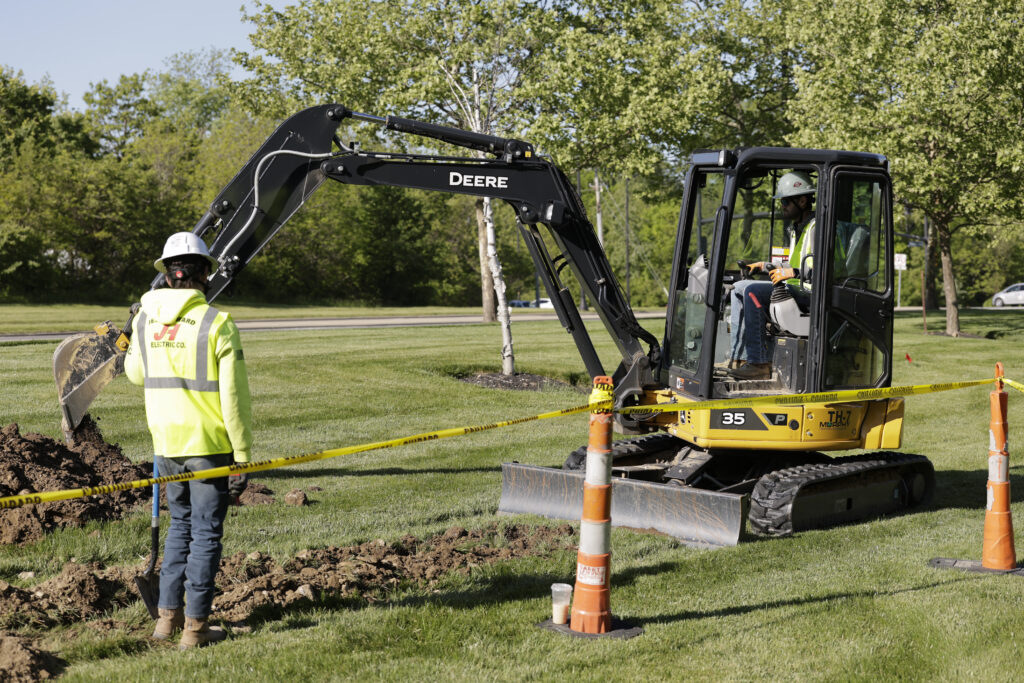
One key initiative is the Safety Summit Pre-conference at SPARK 2026 on October 21, Columbus, OH. Designed for electrical contractors who face real, high-risk conditions every day, from energized work to complex job site coordination. Led by industry experts who understand those challenges firsthand, this program delivers practical, field-tested strategies to help you protect your workforce, stay compliant, and keep projects moving safely. Registration is open at iecspark.com.
At the pre-con, attendees learn how to:
- Apply OSHA, NFPA 70, and NFPA 70E standards
- Implement and refine lockout / tagout procedures
- Identify and mitigate common electrical job site hazards
- Build and strengthen safety programs, too usage, and culture
- Recognize and address mental health factors that impact safety and performance
The IEC Safety Committee also has been driving safety webinars, apprentice curriculum safety updates, new toolbox talks, and other safety resources.
“I think that everyone is really doing a great job and we have some good momentum happening at IEC as it relates to safety and other areas,” Jeff concludes. “I’m proud to be a part of this association for sure!”
2026 IEC Safety Committee
Tom Seiter, Denier Electric, committee chair
Christopher Adams, M&J Electric
Will Barone, Milwaukee Tool
Brian Collister, DNS Technologies
Joe Crow, Ace Electric, Inc.
Patrick Cunningham, Federated Insurance
Kim-Marie Espinosa, IEC Dallas
Wally Esquivel, Central Electric Company
Billy Eudy, Kings Electric Services
Nathan Fuller, Intex Electrical Contractors
Laura Hildreth, IEC Fort Worth
Tedd Holbrook, Ohio Valley Electrical Services
Jeff Hooper, IEC of Oregon
Brent Husted, Box Insurance Agency
Kent Joggerst, EcoPower Electric
Jason Kerr, Federated Insurance Co.
John Rosas, Walker Engineering
Edgar Sanchez, Milwaukee Tool
Ian Seuser, Interstates Construction Services Inc. Fort Collins
Eric Simmons, Helix Electric
Erin Stewart, IEC Dallas
Jeff Wolfla, Boyd, Shackelford, Barnett & Dixon, LLC