
The 2026 edition of the National Electrical Code® (NEC®) is the result of more than 4,000 public inputs (formerly called “proposals”) and just fewer than 2,000 public comments. There were hundreds of changes made, and over the next year we plan to cover some of the most important ones. In this article, we focus on some of the code-wide, or “global” changes.”
Annex L
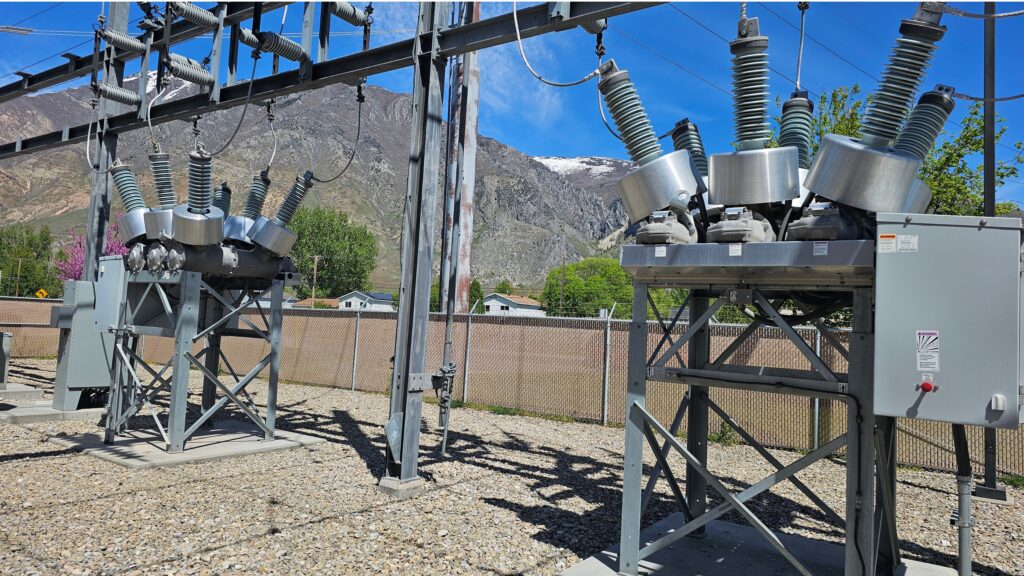
A new Annex L was added to introduce the code reader to the big changes coming to the 2029 edition of the NEC®. The NEC® has enjoyed the same nine-chapter format since 1937, and while the industry has evolved since then, the structure of the code has not. Although it is not set in stone, the 2029 NEC® likely will consist of between 20 and 30 chapters, with much room for growth within those chapters. Not only was a new annex created, but several changes in the 2026 edition were made in preparation for that undertaking. This includes massive reorganizations to the limited energy systems in Chapters 7 and 8, and to the systems operating at over 1,000V ac or 1,500V dc (sometimes referred to as “medium voltage” or “high voltage”).
90.3 Code Arrangement
Chapter 8 is no longer independent of Chapters 1 through 7.
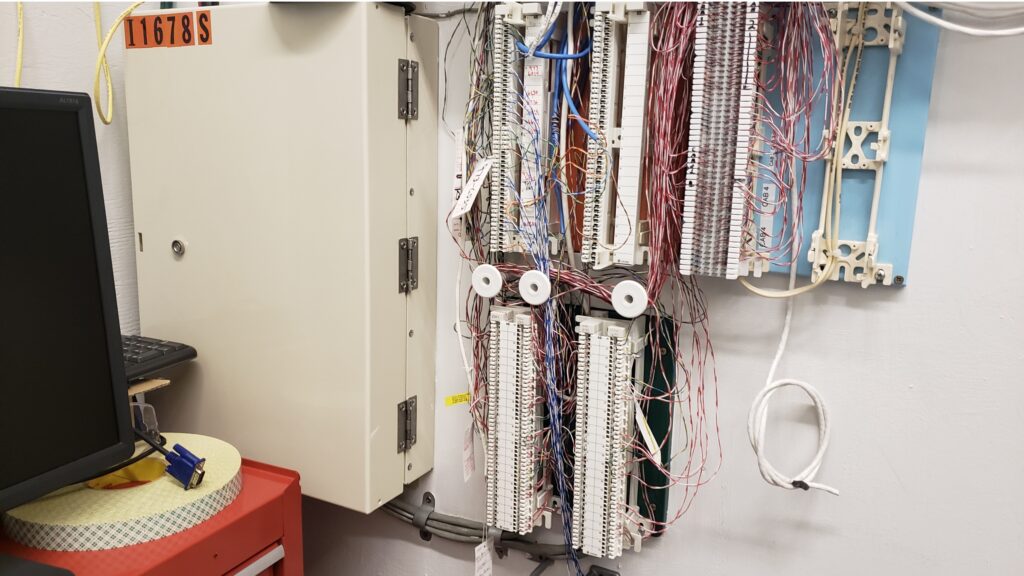
As the electrical industry and technology continue to evolve, there has been much discussion on what a communications circuit is and how the NEC® should apply to them. For decades these were simple questions. A communications circuit was a telephone line that went to a building and it was covered by Article 800. Such an installation was often performed by the telephone service provider and there was little to no reason that their installers needed to understand or even read Chapters 1 through 7. Because of this, 90.3 has long indicated that nothing in Chapters 1 through 7 applies to Chapter 8. Over the years, other types of communications circuits and systems have been added, such as CATV systems using coaxial cable (Article 820), satellite dishes and other antennas (Article 810), and broadband systems (Articles 830 and 840). Chapter 8 was still independent of the rules in Chapters 1 through 7, but that was starting to make less sense. Chapter 8 has ballooned in size over the years, notably due to adding requirements from Chapters 1 through 7. For the 2026 edition of the NEC®, 90.3 was revised to remove the independence that Chapter 8 used to enjoy. Readers that are familiar with Chapter 8 doubtlessly will notice that Chapter 8 is now only a handful of pages as well. That is because much of the material that used to reside there can now be found in Chapter 7, particularly Article 720 through Article 750.
An example of how this change is likely to impact the user is the working space requirements of 110.26. These requirements have never applied to communications equipment, but now they do. The locations of communications and other limited energy equipment will need to be carefully considered once your jurisdiction incorporates the 2026 NEC®.
New, Deleted, and Relocated Articles
Although many in the industry are anxious about the changes for 2029, the restructuring efforts truly began in the 2023 edition and continued in 2026. For this edition, there was much focus on getting the contents of each article correct so the 2029 efforts could be focused more on finding the right location for the article and not so much on the material within the given articles. But some relocation was deemed appropriate for this edition as well.
- Article 220, covering branch circuit, feeder, and service load calculations, was moved to Article 120. Chapter 2 is titled “Wiring and Protection,” and Chapter 1 is “General.” There is nothing more general than performing a load calculation, considering that it must be done for every installation, and a load calculation has nothing to do with wiring or protection. It is hard to argue against this change.
- Energy management systems have been relocated from Article 750 to Article 130. Chapter 7 has become the landing zone for all manner of things that do not seem to belong anywhere else, which is further evidence of why the NEC® needs a reformatting. Should energy management systems be located in an equipment chapter? It is easy to say “yes” to that question. As the United States continues towards the goal of more electrification, energy management systems are likely to be as common as switches and receptacles. For this reason, and because they work hand-in-glove with load calculations, they were relocated to Chapter 1.
- Articles 265 through 270 are now the home for the requirements for systems operating above 1,000V ac or 1,500V dc (sometimes called “medium voltage,” although that term is not defined). Most of this material was previously located in other articles, including 235, 250, and 399.
- Articles 720 through 750 now contain nearly all the requirements for limited energy circuits and systems, and Chapter 8 has been reduced to just a few pages. There was a concerted effort to make the rules in the back of the code look more like those in the front of the book. Much like a typical 120V circuit, a limited energy circuit has a power source and a load, with conductors in between them. Those conductors are usually installed in a cable, raceway, or cable tray. They also have grounding and bonding requirements, as well as overvoltage concerns. In fact, there are more similarities than differences when comparing a limited energy circuit with a higher voltage circuit. Code users that were already familiar with these systems certainly will enjoy not having to flip between Chapter 3 and Chapter 7, and newer users will appreciate the new layout as well. Articles 770, 805, and 840 were deleted, the scope of Article 800 was changed to apply only to outdoor installations, and the remainder of Chapter 8 was reduced by at least 80 percent.
- What are the requirements for a control or signaling circuit that is not power -limited, such as a 120V motor control circuit, and where do you find those rules? For the 2023 NEC®, the answer was 300.26, sort of. For the 2026 NEC®, a new Article 206 was created. The wiring inside of an industrial control panel is often not a limited-energy system, but is also not a branch circuit, feeder, or service. Although Article 206 is quite small, its existence is necessary for circuits within its scope.
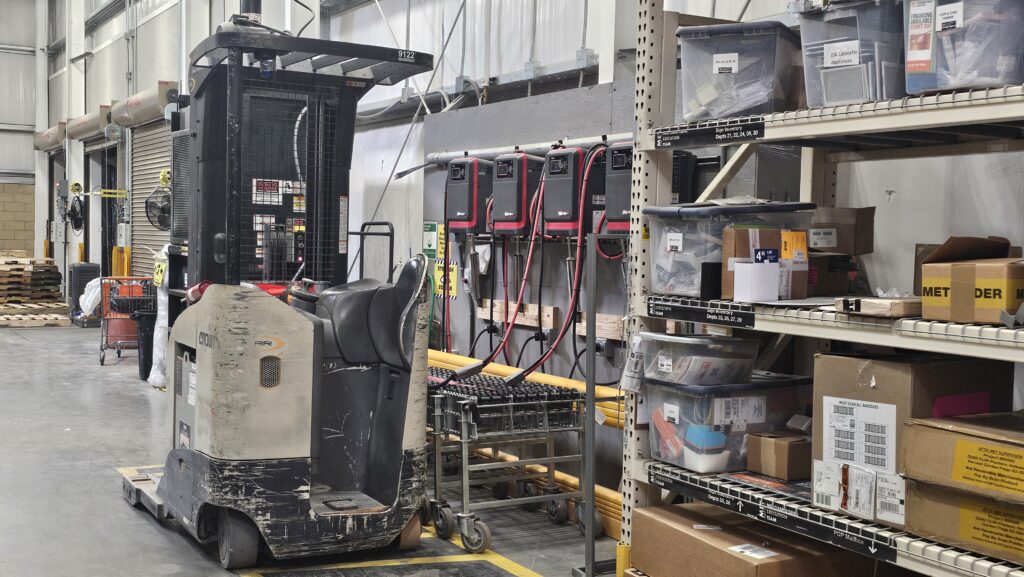
- Article 624 was created to provide requirements for equipment used for charging electric vehicles that are not already covered by Article 625. Article 625 only pertains to vehicles for “on-road” applications, which left code users wondering what the requirements were for charging equipment for golf carts, forklifts, and even planes or boats. The new article provides the guidance needed for these systems.
About the Author

Ryan Jackson is a textbook author and instructor in Salt Lake City, UT, teaching the NEC® countrywide for three decades. His textbooks are used throughout the IEC Apprenticeship Program. Ryan serves on NEC® Code-Making Panels 3 and 17 and several technical committees for UL Standards and Engagement. He also is a technical consultant for the Steel Tube Institute and has worked as an expert witness on several NEC®-related legal matters.
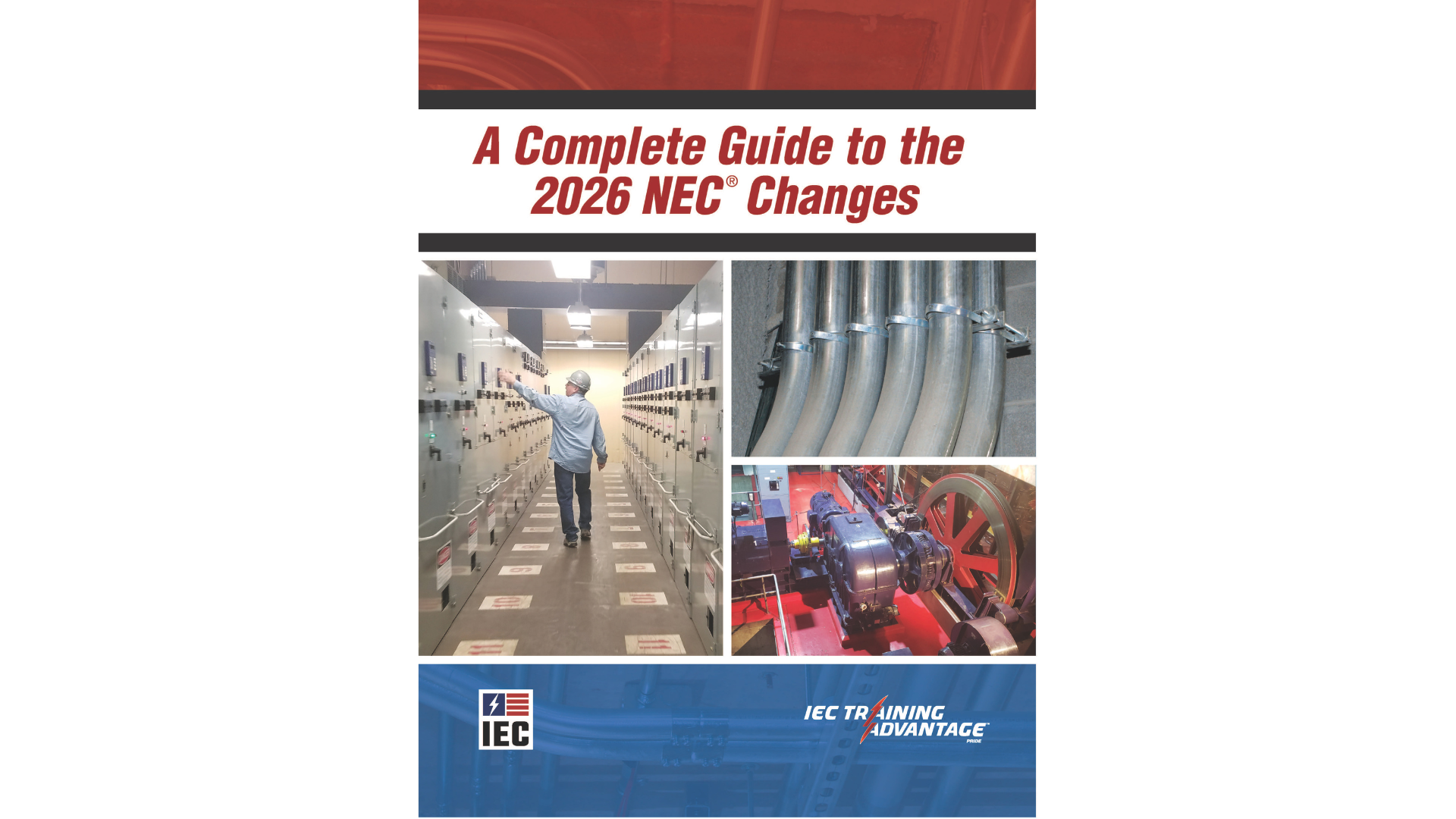
A Complete Guide to the 2026 NEC® Changes by Ryan Jackson is available for purchase. Buy your copy through the IEC Training Advantage bookstore at iectraining.com.