
The 2026 edition of the National Electrical Code® (NEC®) is the result of more than 4,000 public inputs (formerly called “proposals”) and just fewer than 2,000 public comments. There were hundreds of changes made, and over this year we plan to cover some of the most important ones.
Global changes were covered in Insights November / December 2025, Chapter One in January / February 2026, and Chapter Two in March / April 2026.
In this edition of Insights, we focus on a few of the key changes made to Chapter Three.
300.6 Protection Against Physical Damage
The protection requirements for materials beneath roofs were expanded and clarified.
The requirements in 300.6(E) were put in the code several years ago to address damage to equipment from the very large screws that are used to install roofing materials in commercial buildings. This section indicated that cables, raceways, and boxes needed to be at least 1 ½” from the bottom of the deck, but what about conduit bodies? Proposals to add conduit bodies were made, but instead of making the list of items longer, the Code-Making Panel decided to make it shorter but more inclusive. By stating that this rule applies to all wiring methods and materials, any previously overlooked component is now addressed and maintaining a list that covers items individually is no longer needed.
More importantly is the removal of the language in 300.6(E) regarding metal-corrugated roof decking. Other types of roofs will have nails or screws penetrating them, so why were metal-corrugated roofs the only types that had a protection requirement? Now this requirement applies to all roofs. A typical OSB roof deck for a house, for example, will have hundreds of nails that penetrate it from the shingles above. With the increasing popularity of PV arrays, the mounting screws for the module supports are likely to penetrate as well. These screws will certainly damage or destroy any electrical wiring or materials just as quickly as the screws in sheet-metal decks would.
Exception 3 to 300.6(E) was added to address roof decks that have concrete above the deck but below the roof surface. Installing a raceway inside that concrete is not particularly common, but it was inadvertently prohibited because of the language in this section. Exception 3 now allows that practice, provided the concrete is at least 2” thick and any boxes or conduit bodies comply with 314.29 for accessibility.
300.20 Raceway Installations
Welding raceways is now prohibited, without exception.
This section has long indicated that terminating, supporting, or connecting a metal raceway by welding was generally not allowed. This section allowed welding if “allowed elsewhere” in the NEC® (there is no such allowance anywhere in the code) or if it was specifically designed to be welded. But which designer gets to make that determination? The designer of the product? The designer of the building? The contractor who designs the conduit installation? Note that a raceway must never be welded for multiple reasons. The quality and integrity of a weld are very difficult to verify. Any weld that is less than perfect could easily damage the contained conductors when they are installed. The raceway is also not listed to be welded. How a welded raceway would handle thousands of amperes of current during a ground fault is not known. Revisions to 300.20(B) make it very clear that raceways are not to be welded — period.

310.5 Conductors
Smaller sizes of copper and copper-clad aluminum conductors are now allowed for general applications.
During the 2023 NEC® revision cycle, there were several coordinated proposals to allow smaller circuits and smaller conductors for lighting circuits. Some of those changes passed, but others did not. Article 210 was revised to allow 10A branch circuits for supplying lighting loads, exhaust fans, or individual loads on their own circuit (provided a receptacle was not used). Article 240 also was revised to tell the code user which size wire could theoretically be used on these smaller circuits and how to protect them from overcurrent. Article 310, however, has the final say on the minimum conductor size that is allowed to be installed. What was 310.3 (now 310.5) was not changed to allow smaller wires. This was perhaps the single most hotly debated subject in the 2023 revision cycle, with one side of the debate insisting that more data was needed and the other side insisting that the necessary data was already provided. In the end, the 2023 NEC® did not allow conductors smaller than 14 AWG copper or 12 AWG copper-clad aluminum.
For the 2026 NEC®, the requested data was provided and the code was changed. Now a 16 AWG copper or 14 AWG copper-clad aluminum conductor can be used on the 10A branch circuits discussed in Part II of Article 210, and a new Informational Note was added to guide users to that part of the code. Readers should note that although the Informational Note points only to 210.23, it is also worth reading 210.22 for additional context. Section 210.23 addresses branch circuits with more than one outlet; Section 210.22 addresses individual branch circuits. While a 10A multioutlet branch circuit is only allowed for luminaires and exhaust fans, an individual 10A circuit is allowed for any load up to 10A, provided it is not cord-and-plug-connected.
It may be of interest to the reader to note that this change was not only the most hotly-debated subject for the 2023 revision cycle, but also the 2026 revision cycle. This change, and other associated changes, were appealed and the matter was not settled until only a few days before the printing of the 2026 NEC®.
312.11 Enclosures with Switches or Overcurrent Protective Devices
The rules for service conductors passing through enclosures were significantly revised.
This change prohibits service conductors from passing through enclosures that contain circuit breakers or switches but are not the service equipment. There is a requirement in 230.7 that indicates that service conductors may not occupy the same raceway — including wireways — as conductors that are not service conductors. This ensures that the service conductors cannot fault to a feeder circuit as such a fault would bypass the feeder’s OCPD and result in energized conductors even with the breaker turned off. That rule does not apply to enclosures. There was never a requirement that addressed the same hazard in enclosures — until now. Within the service equipment, service conductors may be spliced, tapped, or pass through the enclosure.
This is needed because splicing a PV system onto the service conductors is an extremely common practice and should not be prohibited. It is worth noting that this rule only applies to enclosures that contain switches or fuses, so splicing or feeding through a CT enclosure or meter socket enclosure is still allowed, although the local utility may not allow it.
Section 312.11(B) was not changed.
314.27 Outlet Box Installation and Ratings
The requirements for fan boxes in dwelling units were clarified and reduced.
This section has been the subject of several changes and much controversy over the last several code revision cycles. If a box supports a fan, the box must be rated for that purpose and must be marked to indicate that fact. Problems arise when “regular” boxes are installed for “regular” luminaires in areas that are likely to have a ceiling fan eventually. It was not uncommon for a production homebuilder to install a “regular” box in the middle of a bedroom ceiling and install two switch legs for it. They would then advertise this installation as suitable for a “future” ceiling fan, despite the noncompliant box. That issue was resolved a few years ago by requiring such a box to be rated for ceiling fans, despite a fan not being installed yet. Modern ceiling fans, however, no longer require two switch legs to activate the illumination and the motor independently, so that revision no longer solved the problem. The code then went a bit too far in most peoples’ opinion by requiring nearly every box in any habitable space of a dwelling to be rated for ceiling fans. For example, three pendants installed above a kitchen’s peninsular countertop needed to have three ceiling fan boxes, despite the impossibility of all three being replaced by ceiling fans.
This section now limits the application of this rule to sleeping rooms and living rooms (not kitchens and similar), and to areas that are indicated for ceiling fan use.
314.29 Accessibility of Enclosures
Accessing wiring within boxes is more clearly addressed.
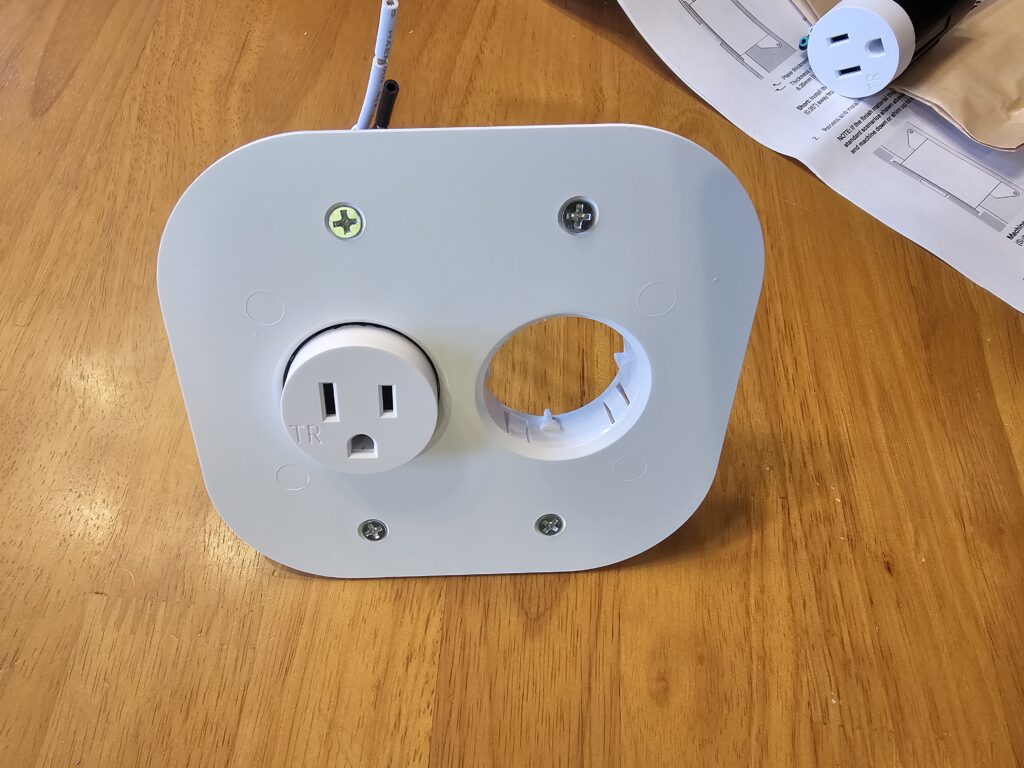
For decades, this section was one sentence long and told the entire story: the wiring within boxes needs to be accessible. A few years ago, however, a new device arrived that changed everything. This device installs flush in the wall and leaves only the single receptacle visible in the finished surface. The wiring in the box behind the wall is “accessible” as defined in Article 100, but requires a special tool and a bit of product knowledge. That product actually complies with the (former) single sentence requirement of this section that the wiring be “accessible.”
Revisions to this section were made to address this unique type of installation, but making changes to address this is far trickier than one may think. How do you write rules for this product without also making a “normal” installation a violation? The requirements in 314.29(A)(1) (not the exception) address a standard 4” by 4” metal outlet box with a single gang plaster ring. The hole in the drywall is only as large as the plaster ring, not the box itself, hence the language in (1), (2), and (3). Item (4) addresses the same thing but with a round plaster ring for a luminaire. The exception addresses the unique equipment described earlier. Sections 314.29(A)(2) and (A)(3) are very straightforward, but also necessary. If the code has rules for small boxes, it must also address large boxes, regardless of how obvious the rule might be.
The material in 314.29(B) for underground boxes was not changed.
334.2 Listing Requirements
The listing requirements for cable accessories were expanded.
Cable ties have had a listing requirement in this article for a few years. This makes sense because not all cable ties are created equal. A listed cable tie can be listed for cable management (Types 1, 2, 11, and 21) or it can be listed for securing and supporting cables and flexible raceways (Types 2S and 21S). For that reason, cable ties need to be listed and identified for securing and supporting.
New to the 2026 NEC®, hangers, staples, and straps must also be listed. There was no technical substantiation provided for this change other than to indicate that a product safety standard exists for hardware used for securing wiring methods. It is worth noting that 334.30 does not include the “other approved” option found in other cable articles, so only listed products are permitted for securing and supporting NM cable. Considering the ease of damaging the nonmetallic sheath of NM cable when compared to the metal jacket of AC or MC cable, this change seems to be a bit more important than the ones in 320.2 and 330.2, respectively.
The same change occurred in several of the cable wiring method articles.
334.24 Bending Radius
The bending radius requirements were decreased and clarified.
Prior to the 2023 NEC®, the bending radius requirement for NM was simple, but perhaps unclear. The rule indicated that cable must have a bending radius of no less than five times the diameter of the cable. But which diameter? If we are talking about a circle, it is perfectly clear, but most NM cable is elliptical, so which diameter do we use? Unfortunately, for the 2023 NEC®, the committee took the safe approach and chose the widest diameter. This only makes sense if the cable is bent against the axis of the widest dimension. The typical way that NM cable is bent makes the width of the cable irrelevant when it comes to how tight you can bend it. This issue is now fixed and the way the cable is bent now drives the requirement.
For example, one manufacturer of NM cable indicates that its 14-2 cable is 0.185” x 0.370”. Prior to the 2023 edition, the code did not specify which dimension of a flat cable was to be used for determining bending radius, although using the smaller dimension makes sense from a logical perspective. This meant the minimum bending radius was 0.925”, which is similar to the radius of bending the cable around a golf ball. With the 2023 requirements, the radius was 1.85”. That is four times more stringent than the previous requirement and changes the bending radius from the size of a golf ball to larger than a softball! For a 14-3 cable with a width of 0.450”, the cable may not be bent tighter than the diameter of a 4.5” ball, despite the thickness of the jacket being the exact same as 14-2 cable. Installing the cable in a stud wall and complying with that rule was extremely difficult and likely ignored.
344.29 Terminations
A new section was added to address conduit threads entering enclosures.
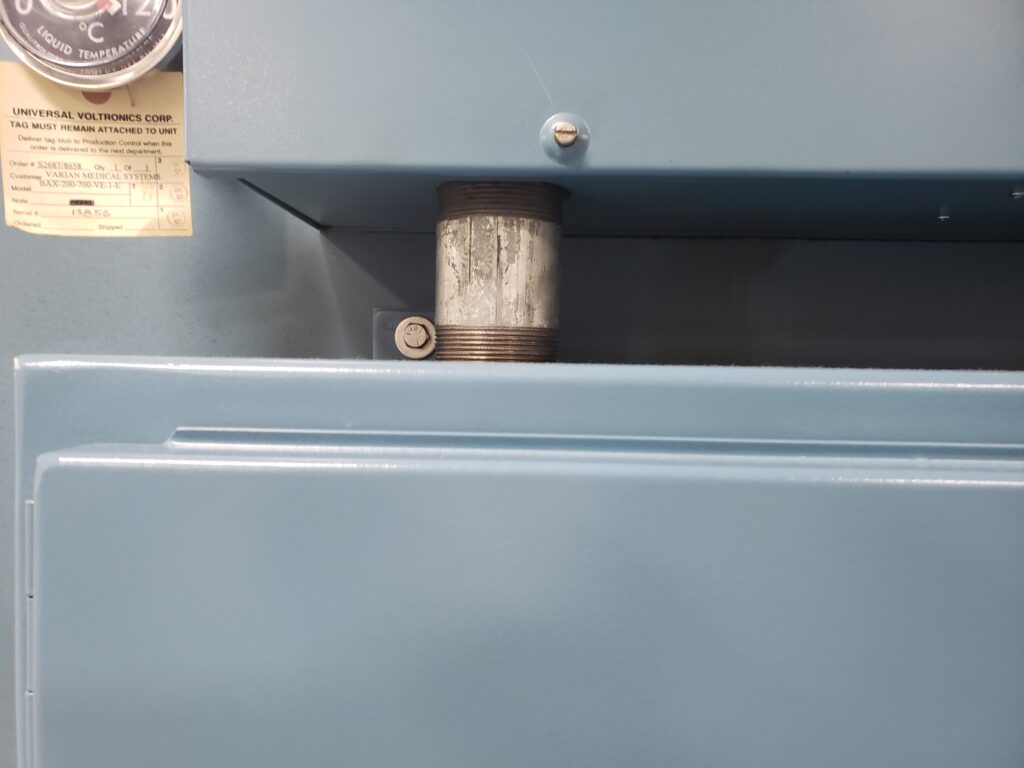
If a threaded conduit is installed between two enclosures that are 24” apart, how many locknuts are required? Most people would say four, meaning each enclosure has a locknut on the inside and a locknut on the outside. Some believed that only two total were required. That idea seems to contradict several code sections like 250.4 and 300.14, although the NEC® did not specifically say so. Now it does. When a threaded conduit enters an enclosure, a locknut or other fitting must be installed on both sides of the enclosure. Note that this applies only when the conduit threads enter the enclosure, so threadless fittings are not addressed by this rule and neither are raceways that enter through a threaded hub. Although this section uses the word “fitting,” remember that 300.6(G) specifically indicates that a plastic or similar bushing is allowed to protect conductors but is not allowed for mechanical connection purposes, so that potential loophole is already closed.
The same change occurred in 342.29 for Intermediate Metal Conduit (IMC).
344.42 Couplings and Connectors
The requirements for couplings and connectors were editorially revised, and all fittings must now be tightened.
Previous versions of this section applied only to threadless fittings. It is important to know that the typical RMC or IMC “coupling” is not a coupling at all. It is not even a fitting. It is part of the conduit itself. These straight threaded couplings are listed to UL 6 (RMC) or UL 1242 (IMC), and not UL 514B (fittings). This means that this rule never applied to the standard coupling (which is not a fitting) and it still does not. It only applied to threadless fittings, such as set screw or compression couplings and connectors. However, there are threaded fittings that truly are fittings. What about a three-piece fitting or a union? Those are fittings but they are not threadless fittings. What are the rules for them? There weren’t any. Now they must be made up tight, and they must be listed for wet locations or concrete-tight when needed. The same change occurred in 342.42 for Intermediate Metal Conduit (IMC).
352.20 Sizes
Larger PVC conduit is now allowed in limited applications.
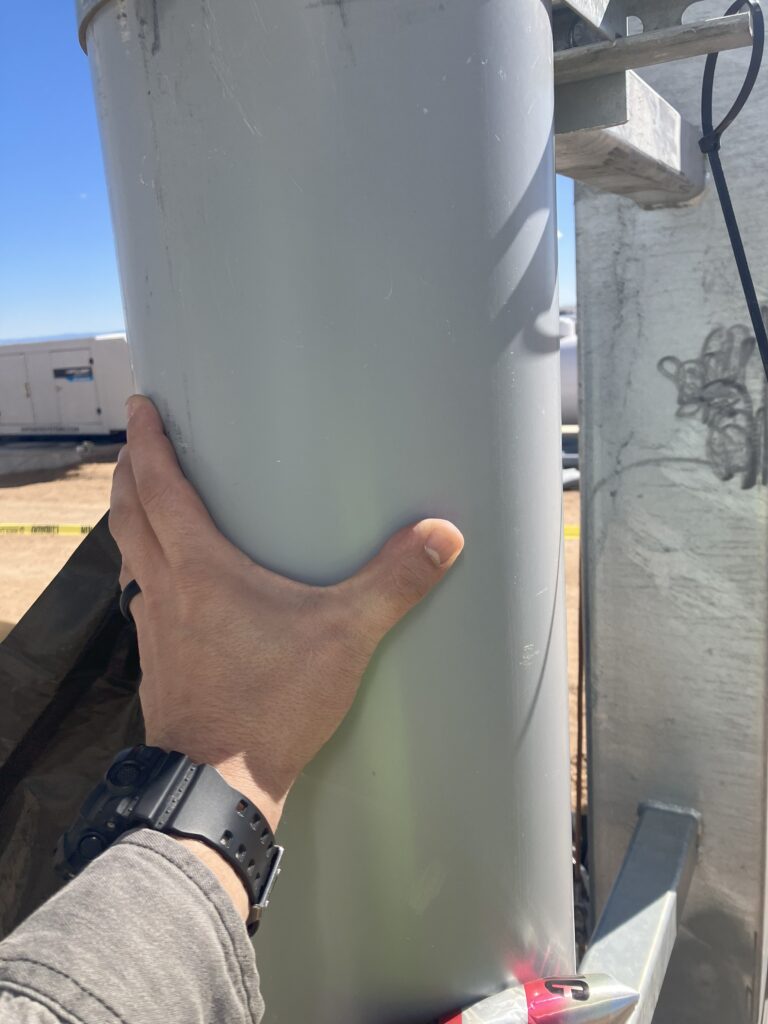
Although there are no listed options as of this writing, PVC conduit larger than trade size 6 is manufactured. It will not be permitted in an NEC®-regulated installation until the product safety standards allow for it, and Chapter 9 will need to be updated to include the interior dimensions of the raceway.
Should the code allow something that is not allowed by the product standard? Should the product standard allow something that is not allowed in the NEC®? The standard or the code needs to change, and the other will follow suit. Perhaps by the time the 2029 NEC® is published, this will be a realistic option.
About the Author

Ryan Jackson is a textbook author and instructor in Salt Lake City, UT, teaching the NEC® countrywide for three decades. His textbooks are used throughout the IEC Apprenticeship Program. Ryan serves on NEC® Code-Making Panels 3 and 17 and several technical committees for UL Standards and Engagement. He also is a technical consultant for the Steel Tube Institute and has worked as an expert witness on several NEC®-related legal matters.
A Complete Guide to the 2026 NEC® Changes by Ryan Jackson is available for purchase through the IEC Training Advantage bookstore at iectraining.com.